Home / Journal
Gut · 6 min readThe nutrient almost nobody in Britain eats enough of
Nine in ten adults fall short, and the gap is not closed by a spoonful of bran.
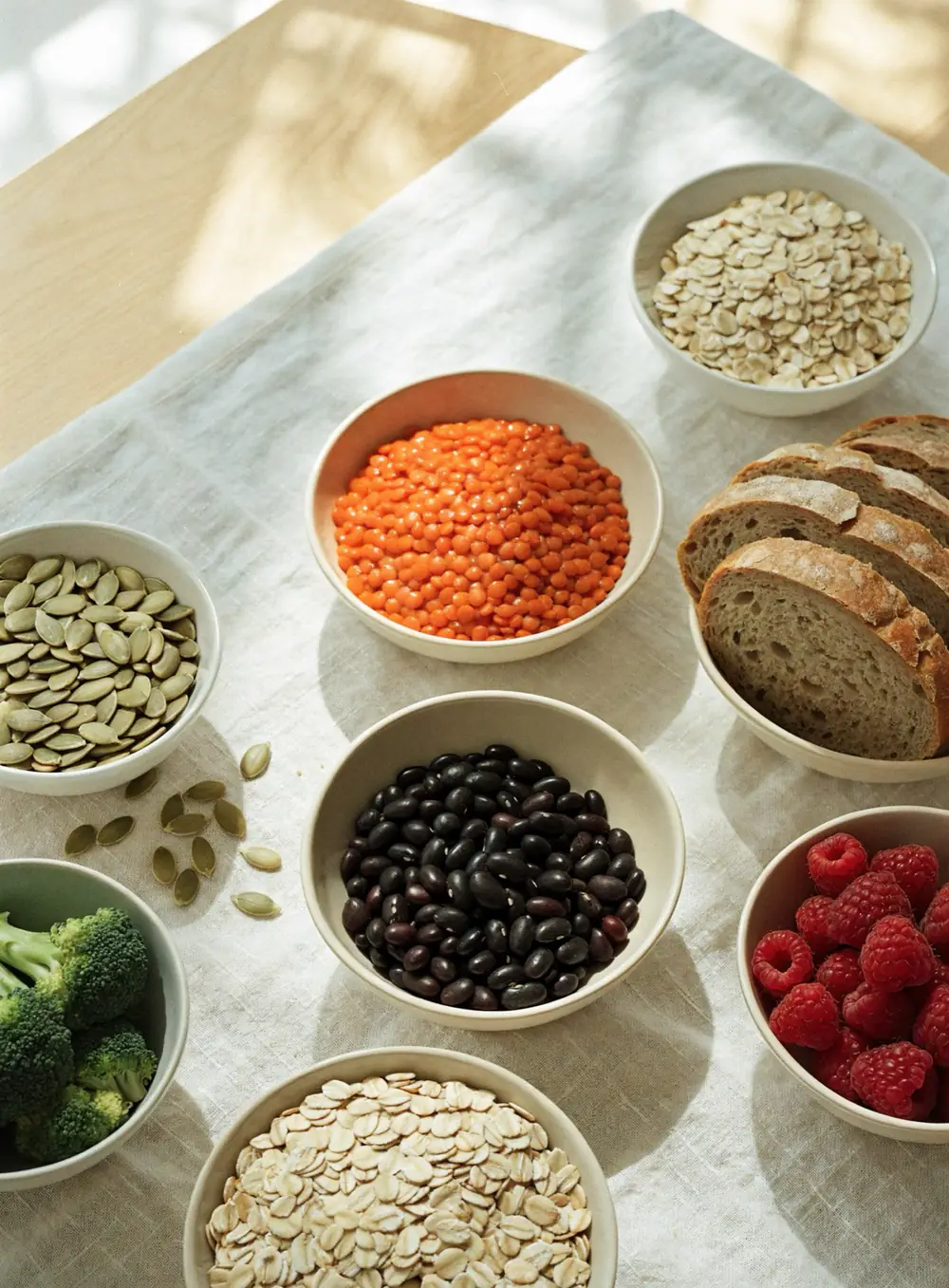
The gap, and what sits in it
UK government advice puts adult fibre intake at 30 g a day. National diet survey data has adults averaging closer to 20 g, with the large majority falling short. It is the most consistently under-eaten thing in the British diet and it rarely gets discussed, because fibre has an image problem: it sounds like something prescribed rather than eaten.
What it actually does is feed the bacteria in your colon. They ferment it into short-chain fatty acids — butyrate above all — which are the primary fuel for the cells lining your gut and which act well beyond it, on appetite signalling, on immune regulation and on the gut barrier itself. Fibre is less a nutrient you absorb than a nutrient you subcontract.
a day, for adults
with most adults short
The variety target worth aiming at
Variety turns out to matter more than volume
The most useful finding of the last decade of microbiome work is that the number of different plants you eat predicts the diversity of your gut bacteria better than the total grams of fibre does. The figure that came out of the American Gut Project — people eating thirty or more distinct plants a week had markedly more diverse microbiomes than those eating ten or fewer — has become a rule of thumb for good reason.
Thirty sounds daunting until you count properly. Herbs, spices, nuts, seeds, wholegrains, pulses, and every different colour of fruit and vegetable count separately. A mixed bag of frozen berries is four plants. A tin of mixed beans is three or four. Most people are further along than they think, and the cheapest way to move is variety rather than volume.
Schematic of the association reported in large citizen-science microbiome datasets. It is observational: people eating many different plants differ in other ways too. Gut diversity is also a crude summary of a complex system rather than a score to chase.
Raise it slowly, and drink water
The reason people try fibre and give up is that they double it in a week and feel dreadful. The bacterial population takes time to shift, and outrunning it produces gas and bloating that feel like intolerance but are just adaptation. Add roughly 5 g a week and let it settle.
Fluid matters too: fibre works by holding water, and more fibre with the same fluid is how you produce the opposite of the intended effect. If you have IBS, a diagnosed gut condition, or a history of bowel surgery, this is one to take individual advice on rather than following general guidance.
- 01
Count plants, not grams — herbs and spices included
The reframe - 02
Add about 5g a week, not all at once
How to start - 03
Raise fluid alongside it, or it backfires
The bit people skip
General nutrition education, not medical advice. If you have IBS, inflammatory bowel disease, a history of bowel obstruction or surgery, or unexplained bowel symptoms, take individual advice before substantially changing fibre intake. Full health disclaimer →
Want this applied to you, not to the average?
A free ten-minute call, and an honest view of what would actually move for you.